Malawi seeks to generate $30 billion (about K52.5 trillion) in mining exports by 2040, with reforms and development partner support expected to attract investment, create jobs and boost government revenue, a new report has indicated.
The targets are outlined in the World Bank Group’s October 2026 Metals and Minerals Country Compact, which identifies seven advanced-stage mining projects as potential drivers of economic transformation.
The compact says Malawi’s mining sector currently contributes less than one percent of gross domestic product (GDP) despite deposits of uranium, graphite, rare earth elements, rutile and niobium offering opportunities to diversify exports beyond tobacco, the country’s major foreign exchange earner.
“Strategic reforms can unlock additional projects, increasing annual revenue to approximately $600 million, a 50 percent improvement,” the report said, comparing this with an estimated $400 million under a business-as-usual scenario by 2040.
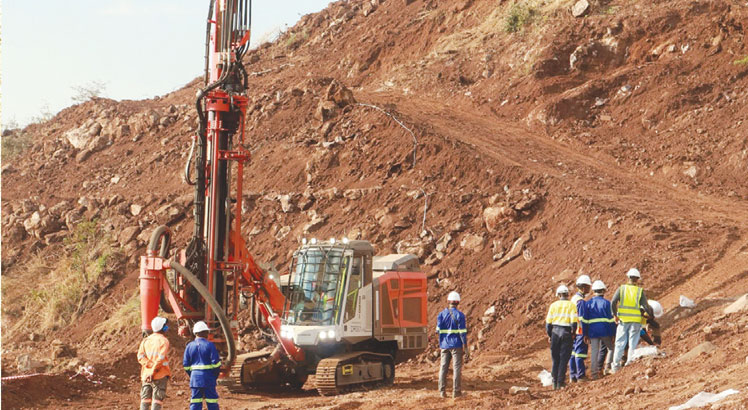
project in Balaka District. | Nation
The compact targets about $3.6 billion in private investment, 2 800 direct jobs in sustained mining operations and up to 8 300 construction jobs alongside additional employment generated across the wider economy.
But the compact said unreliable electricity, poor transport infrastructure, foreign exchange shortages, lengthy licensing processes and regulatory uncertainty remain major obstacles to developing the sector and attracting investors.
To address these constraints, the World Bank Group plans to support a mineral value chains project with about $70 million in financing, including improvements to geological data collection, mining licence administration and institutional capacity.
In an accompanying statement, Minister of Mining Thoko Tembo said the compact seeks to position mining not as an isolated industry, but as a catalyst for industrialisation and structural economic transformation.
He said: “Implementation of this compact will contribute to increased domestic and foreign investment, expanded mineral exploration and responsible mining operations, increased value addition and beneficiation, strengthened local enterprise development, improved employment opportunities and increased fiscal revenues that can be reinvested in national development priorities.
“The Government of Malawi is committed to ensuring that the country’s mineral wealth is developed responsibly, transparently and for the benefit of all Malawians.”
Recently, significant reforms have been made to strengthen governance of the mining sector, including the enactment of the Mines and Minerals Act 2023, the establishment of the Mines and Minerals Regulatory Authority, Malawi Mining Investment Company and the promotion of policies that encourage investment while safeguarding environmental sustainability and community interests.
The compact identifies Kayelekera Uranium Mine in Karonga, Kasiya Rutile and Graphite project in Lilongwe, Kanyika Niobium Mine in Mzimba and rare earth deposits at Kangankunde in Balaka and Songwe Hill in Phalombe among the opportunities that can expand exports and generate foreign exchange.
The government and its development partners will implement the compact from 2026 to 2030, with longer-term targets extending to 2040 as Malawi seeks to turn its mineral wealth into industrial growth, stronger public finances and wider economic benefits.